Return to player (RTP) is one of the most-important concepts to slots players. Payback determines how much the average player wins from a slot machine.
A slots game with 95% RTP, for example, would theoretically deliver $0.95 back for every $1 wagered. A slot machine with 88% payback would only offer $0.88 for each dollar wagered.
Gamblers want to know slots’ RTP for obvious reasons. Knowing a machine’s payout percentage provides an indication on your long-term odds of winning.
The Monthly Video Gaming Reports and the corresponding Comma Separated Values (CSV) File agree to Illinois Gaming Board data. The CSV file can be downloaded into other file types and managed for the ease of the user, however, the Illinois Gaming Board is not accountable for the reliability of disseminated information resulting from changes to the Illinois Gaming Board's data that are made. Licensed Video Gaming Locations may continue to possess authorized crane games, vending machines, coin-in-the-slot games and redemption machines as defined in Section 28 of the Illinois Criminal Code. It’s impossible to predict if a slot machine will pay out at a specific moment; anyone claiming otherwise either doesn’t understand how slot machines work or they work as a casino promoter. If it were possible to identify precisely when a slot machine is about to pay, then the casinos would lose money, and we are all aware of the fact that it usually doesn’t happen.
But one of the most-common fears is that casinos can simply change slots odds whenever they feel like it. Many gamblers are convinced that casinos alter RTP for a variety of reasons, whether it’s to lower payback during busy hours or simply earn more overall profits.
This fear seems valid when considering that players don’t see the inner workings of slot machines. But are casinos really able to alter payback on a whim?
I’m going to discuss this matter by looking at how casinos change RTP, common beliefs on the subject and casino limitations in controlling payback.
Slot machine RTP is determined by the pay table and how often each prize is programmed to hit.
The pay schedule shows how many credits each symbol combination delivers. The pay table only tells so much, though, and doesn’t show how often each payout is programmed hit.
Each symbol features a certain number of “stops,” which determine how often it’ll land on the reels. Low-paying icons are always programmed with more stops than high-paying symbols.This aspect makes perfect sense when considering that casinos would lose money if they showered you with the jackpot and other large payouts. Instead, games offer lots of smaller prizes and rarely pay the jackpot.
A random number generator (RNG) ultimately determines which symbol combinations come up on each spin. Contrary to common opinion, the RNG does not determine payback.
Instead, this program merely cycles through different symbol combinations to determine the results of your spin. The RNG is more likely to include symbols that have a higher number of stops.
Il Slot Machines Payout Percentage
An RNG has no recollection of what happens on your previous spins. Instead, its main job is to come up with random results.
Again, icons with many stops will be chosen by the RNG more frequently than other symbols.
Casinos don’t need to worry about programming payout percentages — this is the game developer’s job. Instead, they simply consider what RTP they want to order for a given game.
Providers give land-based casinos a number of options to choose from when ordering payback.
Here’s an example:
- MGM Grand wants to order Aristocrat’s Game of Thrones.
- Aristocrat offers RTP choices of 88.0%, 90.0%, 92.0%, and 94.0%.
- MGM selects the version with 92.0% payback.
Online slots developers usually offer a uniform RTP for any game that they produce. Internet casinos that license their slots are then forced to use the provider’s chosen payout percentage.
But a minority of online slots providers do let casinos choose from preset RTP amounts (covered later).
How casinos change payout percentages depends upon the style of game. Payback for most land-based slot machines is determined by the EPROM chip located inside.
A gambling establishment can alter a machine’s RTP as long as they have the EPROM chip, which is sometimes the case. Theoretically, any casino that has these chips can change payback whenever they like.
The catch, though, is that many gambling jurisdictions require the casinos to report when they alter a game’s RTP. This process requires that a casino manager spends time filling out paperwork.
Some slot machines operate on downloadable software, which comes from a central server. In these cases, the casino doesn’t have to open a game and change a chip.
Instead, they can simply download the software to alter RTP. But just as with replacing an EPROM chip, casinos need to follow their jurisdiction’s guidelines when changing server-based payout percentages.
For starters, gambling venues can’t make these changes when somebody is playing a machine. Furthermore, they have to wait a certain amount of time before altering any game settings.
What’s the Common Belief about Casinos Changing Slots Payback?
Some slots players believe that casino owners and management can change RTP across the board by simply flipping a switch. This theory has been furthered propelled bythe rise of video slots.
Very few land-based slot machines operate on mechanical reels and levers these days. Instead, casinos mainly feature video slots that run through software programs.
Of course, gamblers’ fears are only magnified when dealing with online casinos. These websites are headquartered far away from most players, leading to concerns that internet casinos can do anything they want to slots payback without anybody knowing.
But what else beyond suspected greed leads players to believe that casinos will cheat them through lower RTP?
A driving force behind conspiracy theories is how slot machines are the streakiest casino game. Most slots only see players win around 20-40% of their spins, even with every payline activated.
Such low hit frequency leads gamblers to experience long losing streaks. In turn, these cold streaks cause players to theorize that casinos have changed RTP.
What’s the Real Story Behind Casinos’ Ability to Alter RTP?
Contrary to what some players believe, casinos don’t simply alter payout percentages whenever they feel like winning more money. Instead, gambling venues must go through the proper channels.
Earlier I covered how many jurisdictions require casinos to submit paperwork before changing the EPROM chip inside a slot machine.
Not only does an important employee waste time filling out paperwork and sending it to the local gambling control commission, but the casino must also pay for another EPROM chip. These chips are expensive, meaning it’s not economically viable to continue changing RTP.
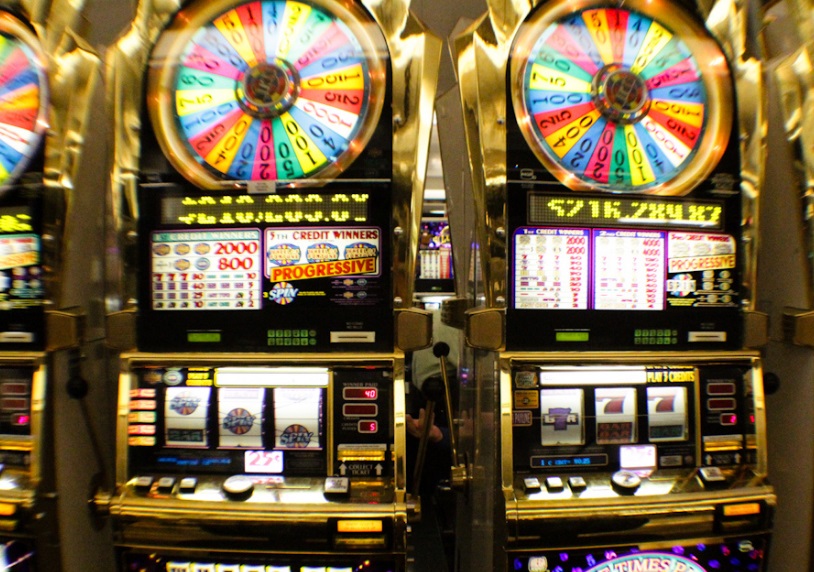
Of course, server-based slot machines can be altered faster without opening machines. But there are deterrents from doing this as well.
Some Las Vegas slot machines are so popular that they have people standing off to the side waiting to play. Therefore, casinos can’t change RTP for these games until things slow down in the middle of the night.
More importantly, gambling establishments don’t like tying up games and preventing people from playing. This creates another situation where it doesn’t make economic sense to put games down for maintenance just to constantly change payback.
Casino employees’ time is valuable, especially with regard to managers. It would be a waste of resources and manpower to alter RTP from machine to machine.
Of course, none of this subsides fears that online casinos can change payout percentages as they please. But gaming sites face roadblocks in this regard too.
In fewer cases, online casinos can choose from different RTP options just like land-based establishments. Realtime Gaming (RTG) commonly does this by offering their clients payout percentages ranging from 91.0% to 97.5%.
Casinos must decide on the chosen payback when ordering a certain game. They can’t, however, ask RTG to change payout percentages back and forth every day.
RTG allows gaming sites to choose from different payout percentages due to the various bonuses offered through their software setup. RTG offers total casino packages where they handle the bonuses, games, and more. Clients have some flexibility here and can either choose high bonuses with low slots RTP or vice versa.
In any case, you can see that there’s nothing nefarious going on with the average online casino and game provider. This is especially true when considering that many slots developers and casinos undergo third-party auditing to ensure that their games offer fair and random results.
Is there Any Truth to the Idea That Casinos Can Change Payback with a Switch?
Earlier I mentioned how some players believe that casinos can merely flip a switch to change all of their slot machines’ RTP.
I dismiss this idea, because casinos need to go through the proper channels to change payback. But is there any shred of truth to the switch-flipping concept?
A 2006 New York Times piece offers evidence that it’s possible for casinos to quickly change RTP for many different games.
This article revolves around a Treasure Island casino executive named Justin Beltram, who discusses how his casino was undergoing a technology experiment at the time.
The piece reads that “with a few clicks of his mouse” Beltram can reprogram the “denominations required to play, payback percentages, even game themes” for all of Treasure Island’s 1,790 slot machines.
Much of the article deals with how easy it is to change settings in server-based slots versus the EPROM-chip games. Beltram notes that he could change a game’s settings within “20 seconds” using this technology, compared to the lengthy and complicated process of opening machines to alter settings.
The executive also squashed the notion that his casino would abuse this power to win more money from players. Beltram insists that such practices would be bad for business and possibly lead to trouble with gaming regulators.
David G. Schwartz, director for UNLV’s Center for Gaming Research, did express concerns about casinos changing payback through servers. “Let’s say you’re playing at 2 and you’re doing great and you come back at 6 and the pay tables have changed,” explains Schwartz.
While this is a valid concern, lowering odds and causing players to lose more is counterproductive to business. Nobody wants to play at a casino where they think that the odds are stacked against them.
Beltram notes that the goal of server-based slot machines is all about quickly catering to players’ demands. He told a story about a high roller who wanted to play a $25 Double Diamond machine. This game didn’t have server technology, forcing Treasure Island to order the chip from IGT and quickly replace the coin denomination before the high roller could begin playing.
Overall, the article suggests that while it’s possible for casinos to quickly change slots payback with server technology, this concept is more about meeting customer demands than anything.
Long story short, casino managers don’t have time to sit in their back office and switch RTP every time that they see somebody winning. Casinos already have the edge over players, and it’s not worth the time or repercussions to con gamblers.
The thought that casinos instantaneously change all of their slots payback is only one misbelief regarding the subject. Here are a few more myths surrounding how casinos handle slots RTP.
Slots Payback Happens on a Cycle
Some gamblers are convinced that slots payout percentages happen on a cycle. This idea stems from the belief that slot machines are programmed to offer payouts at specific intervals.
Il Slot Machine Payouts Machine
Here’s an example of how one might conceptualize this:
- Jackpot pays exactly once every 1 million spins.
- 1,000-coin prize pays every 250,000 spins.
- 500-coin prize pays every 50,000 spins.
- 100-coin prize pays every 10,000 spins.
- 50-coin prize pays every 5,000 spins.
- 5-coin prize pays every 50 spins.
- 1-coin prize pays every 10 spins.
Players who believe that slot machines work like this often think that they can win a jackpot by playing at the right point. They look for a jackpot that hasn’t been won in a while and start playing in hopes that the game is nearing the end of its payout cycle.
But slots results are determined by an RNG, which has no recollection of previous payouts and merely continues generating random results.
Jackpots and other payouts are programmed with specific odds. Certain jackpots may very well be programmed to pay every 1 million spins on average.
But the key is that this prize doesn’t have to pay out after exactly 1 million rounds. Instead, the jackpot can hit at 500k spins or 2 million spins.
Casinos Change RTP during the Day and Night
Another common slots myth is that casinos alter payout percentages throughout the day. This theory is based on the logic that slot machines are more generous during the less-busy day hours and tighter during the busier evening hours.
It makes sense to believe that casinos would tighten payback when they have more slots customers. Doing so would enable them to earn far more profits.
If a slot has a 5% house edge, this means that casinos are winning a nickel for every dollar wagered by players. Assuming a gambler bets $600 per hour, the casino is making $30 on average (600 x 0.05).
The last thing a gambling establishment wants to do is lower payback and discourage people from playing during busy hours.
Many gamblers already become suspicious that payback has changed when they go through cold streaks. Casinos don’t want to add fuel to this fire by actually altering RTP just to increase an advantage that they already have.
Native American Casinos can Do Whatever They Want
I’ve covered the limitations facing gaming sites and commercial land-based casinos when altering slots payout percentages. But what about Native American casinos?
Some slots players believe that US tribal casinos can do whatever they want, because they’re located on sovereign ground. The reality, though, is that Native American casinos don’t have as much free rein as people think.
These casinos must comply with gambling regulations set forth by the tribe’s gambling commission. These standards are defined by negotiations between tribes and the state where they’re located.
Once the state and tribe come to an agreement, the pact must be approved by the US Department of the Interior.
Contrary to some players’ opinions, Native American gambling venues don’t make rules as they go and change slots payback whenever. Instead, they too have regulations that are discussed and approved by multiple parties.
Many gamblers picture casinos fiendishly lowering slots RTP to maximize their profits. But these theories are the result of misunderstandings about how the gambling industry works.
Most land-based and online casinos operate in jurisdictions that impose restrictions on alerting payout percentages. Some jurisdictions go as far as to require paperwork every time that casinos want to change RTP.
In other cases, gambling venues can quickly change payback through server technology. Even this comes with restrictions, though, including a machine being down while the casino changes payback.
You can generally assume that most land-based slot machines offer anywhere from 88% to 95% RTP. Penny and nickel slots comprise the lower end, while quarter denominations and above constitute the higher end.
Online slots usually deliver between 95% and 97% payback. You can google individual slots or game providers to research online payout percentages.
You have little reason to fear casinos lowering RTP to a ridiculously small percentage. They have too much at stake if they’re caught, and gambling jurisdictions have rules against doing so.
They are VLTs correct? So playing them is a bad idea correct?
They actually call them 'Video Gaming Terminals' (VGTs) because the lottery does not run the game. Regardless of the name, the games are all RNG-driven just like in Vegas and Illinois riverboats. So slots and video poker act exactly the same.
Il Slot Machine Payouts Jackpots
The technical standards of Illinois VGTs may be found here:
http://www.igb.illinois.gov/VideoGaming/Technical%20Standards%20for%20Video%20Gaming%20Terminals%20in%20IL%20v1.3.pdf
But with video poker, the game is usually has lower pay tables than I would like. The law capping a win at $500 hurts the game too since a royal with 5 quarters bet is usually $1000. Also I wouldn't recommend playing VP for more than 5 quarters because of this payout cap. The best video poker I have found so far is 7/5 Super Aces Bonus (97.61% 1-coin; 97.92% 5-Coin). I've found it on IGT games in multiple locations.
Lately, the overall return of these games (includes both slots and video poker; heavily weighted by slots because penny slots are the most popular games) is about 92%. The riverboats are closer to 91% right now. The biggest drawback to the 'bar games' though is that they don't have loyalty programs usually (it is legal for them to have such a setup though) and the atmosphere is nothing close to an actual riverboat.
They actually call them 'Video Gaming Terminals' (VGTs) because the lottery does not run the game. Regardless of the name, the games are all RNG-driven just like in Vegas and Illinois riverboats. So slots and video poker act exactly the same.
The technical standards of Illinois VGTs may be found here:
http://www.igb.illinois.gov/VideoGaming/Technical%20Standards%20for%20Video%20Gaming%20Terminals%20in%20IL%20v1.3.pdf
But with video poker, the game is usually has lower pay tables than I would like. The law capping a win at $500 hurts the game too since a royal with 5 quarters bet is usually $1000. Also I wouldn't recommend playing VP for more than 5 quarters because of this payout cap. The best video poker I have found so far is 7/5 Super Aces Bonus (97.61% 1-coin; 97.92% 5-Coin). I've found it on IGT games in multiple locations.
Lately, the overall return of these games (includes both slots and video poker; heavily weighted by slots because penny slots are the most popular games) is about 92%. The riverboats are closer to 91% right now. The biggest drawback to the 'bar games' though is that they don't have loyalty programs usually (it is legal for them to have such a setup though) and the atmosphere is nothing close to an actual riverboat.
I was hoping you would reply, thanks for the wealth of information on the VGTs. So it sounds like if I find a good game one credit might be my best bet on it? Also do you know of any recourse if the bar 86s the machine so they don't have to pay out?
I was hoping you would reply, thanks for the wealth of information on the VGTs. So it sounds like if I find a good game one credit might be my best bet on it? Also do you know of any recourse if the bar 86s the machine so they don't have to pay out?
Well, one credit pays very similar to five credits for video poker by percentage, and since the games are all negative longterm, I usually just play 7/5 Super Aces for 1 quarter when I briefly play these things when I visit the Chicagoland area. I haven't found a game that's positive, and it's doubtful you ever will. It's against the law for any machine to be > 100% in the long-term. So the only way a game could possibly be positive is if they put a progressive slot game on the units, which I don't think I have found so far.
And I'm not sure what exactly you mean by the latter question. Are you saying when a malfunction in the machine occurs, so they have an issue in paying you? Unfortunately this is probably a more fuzzy area, and resolution of the problem will be a lot more difficult/time intensive than at the riverboats because the bar employees there will be ill-equipped to fix the problem, and will likely have to call the VGT manufacturer to have one of their employees to be sent out to fix the problem. I would assume you would eventually get paid, but I dunno how long it would take. Fortunately, I have never seen a unit malfunction in my limited play on these things so far.
If the bar literally gets rid of their video gaming terminals (has any bar actually done this yet??), then I would expect they would still have to honor any vouchers until their expiration dates. Here is the relative law for this scenario: http://ilga.gov/commission/jcar/admincode/011/011018000N14200R.html
Well, one credit pays very similar to five credits for video poker by percentage, and since the games are all negative longterm, I usually just play 7/5 Super Aces for 1 quarter when I briefly play these things when I visit the Chicagoland area. I haven't found a game that's positive, and it's doubtful you ever will. It's against the law for any machine to be > 100% in the long-term. So the only way a game could possibly be positive is if they put a progressive slot game on the units, which I don't think I have found so far.
And I'm not sure what exactly you mean by the latter question. Are you saying when a malfunction in the machine occurs, so they have an issue in paying you? Unfortunately this is probably a more fuzzy area, and resolution of the problem will be a lot more difficult/time intensive than at the riverboats because the bar employees there will be ill-equipped to fix the problem, and will likely have to call the VGT manufacturer to have one of their employees to be sent out to fix the problem. I would assume you would eventually get paid, but I dunno how long it would take. Fortunately, I have never seen a unit malfunction in my limited play on these things so far.
If the bar literally gets rid of their video gaming terminals (has any bar actually done this yet??), then I would expect they would still have to honor any vouchers until their expiration dates. Here is the relative law for this scenario:
My friend was playing at a bar and hit a couple hundred dollar jackpot, the owner not wanting to pay it out unplugged the bank of machines.
My friend was playing at a bar and hit a couple hundred dollar jackpot, the owner not wanting to pay it out unplugged the bank of machines.
LOL wow. I would have immediately called the phone number on the sign that should be posted on the outside of every gaming area. The game result would be stored in memory for awhile. If this happened last night though, I'm not sure as the minimum requirement is only 10 games of recall (but it could be able to store more). I'd still call this number if I was him. And of course, never play, eat, or drink there again.
http://www.igb.illinois.gov/VideoGaming/VGSignRequirements.pdf
Illinois Gaming Board Hotline: 1-855-494-0237
LOL wow. I would have immediately called the phone number on the sign that should be posted on the outside of every gaming area. The game result would be stored in memory for awhile. If this happened last night though, I'm not sure as the minimum requirement is only 10 games of recall (but it could be able to store more). I'd still call this number if I was him. And of course, never play, eat, or drink there again.
http://www.igb.illinois.gov/VideoGaming/VGSignRequirements.pdf
Illinois Gaming Board Hotline: 1-855-494-0237
He called when it happened, this was about a month ago, though I don't know what exactly came of it. Pretty sure they ended up kicking him out by the end of everything because he was obviously irate. I'm just debating going there and trying my luck and see if the owner is stupid enough to do it again. The bar is literally a minute from my house and I wouldn't mind seeing what I can do with $100 there
He called when it happened, this was about a month ago, though I don't know what exactly came of it. Pretty sure they ended up kicking him out by the end of everything because he was obviously irate. I'm just debating going there and trying my luck and see if the owner is stupid enough to do it again. The bar is literally a minute from my house and I wouldn't mind seeing what I can do with $100 there
I'd probably get kicked out too at some point if it happened to me. And I would probably ask what happened with your friend first. If he didn't get paid, then you're really, really gambling. I have a bad feeling the owner cashed the machine out after the bar was empty. Also if the owner didn't get punished either, then it's definitely possible he'd do it again. I would drive further just to avoid playing there; there are like 5 bars within 5 minutes of my g/f's parents' house for example. But if you still decide to play there, make sure you cashout any sizable hit immediately, and ideally play when the owner wasn't looking. The game I typically play pays $100 for 4 Aces if you bet a quarter. $500 if you bet $1.25, so he would definitely have an incentive to screw me over if he thought he could get away with it.
I'd probably get kicked out too at some point if it happened to me. And I would probably ask what happened with your friend first. If he didn't get paid, then you're really, really gambling. I have a bad feeling the owner cashed the machine out after the bar was empty. Also if the owner didn't get punished either, then it's definitely possible he'd do it again. I would drive further just to avoid playing there; there are like 5 bars within 5 minutes of my g/f's parents' house for example. But if you still decide to play there, make sure you cashout any sizable hit immediately, and ideally play when the owner wasn't looking. The game I typically play pays $100 for 4 Aces if you bet a quarter. $500 if you bet $1.25, so he would definitely have an incentive to screw me over if he thought he could get away with it.
I have a casino within 15 minutes of where I live I am more going to see if he would really do it again and if he does make sure he gets punished for it. The bar in question is a terrible place that draws a terrible crowd. It is the worst...but if I can take money from it I will and if he wants to pull some shady business, I won't let it happen. I will have to check out what games they have and see what the best pay table is, hopefully they have the one you speak of and I can hit a nice 4 aces and see how they handle it.