Slot Lover - Slot Machine Videos Channel Usually Post: Big Wins, Super Big Wins, Live Play, Double or Nothing, High Limit Pulls with Friends Where Do I play.
CLEOPATRA ONLINE SLOT REVIEW
- Progressive Jackpot: No
- Software: IGT
- Paylines: 20
- Reels: 5
- RTP: 95.7%
Online slots that feature a theme based on ancient times and historic characters almost always give slots enthusiasts a refreshing experience. When it comes to historic and ancient slot themes, you will find Norse, Roman and Greek characters at the forefront. Some machines feature mythological figures but this slot is based on somebody who actually existed back in ancient Egypt - Cleopatra. She lived between 69BC and 30BC and was the last pharaoh of Egypt as well as the partner of Roman politician Mark Antony.
The slot machine game Cleopatra is a five-reel, 20-payline game produced and distributed by IGT. This machine comes with graphics and animation that constantly reminds you of the theme and of this ancient queen. While the images and movement of the machine may appear to be somewhat dated, it actually adds to the charm of this Egyptian themed slots game.
The game lets you travel back to Ancient Egypt, and to play, you will first need to change your bets to the amount you want to wager with each spin. The coin value goes from 0.01 to 100 and this can be done by clicking the plus and minus symbols beside the 'Line Bet' button. The 'Lines' button changes the number of paylines played and lets you increase and decrease the number of lines you play. To trigger the game, you need to click 'Spin' and, if you wish to turn the reels multiple times without any interruptions, just press 'Auto Spin' and you’re good to go.

The Cleopatra slot machine is definitely a well-designed game with a free spins feature that can be easily triggered. While the soundtrack might seem a little too mystical for some, it does burst into life whenever you land a win on a payline.
FEATURE SYMBOLS
Expect to see a plethora of symbols in this game, which all work to help raise your chances of winning big. The lower value symbols are 9, 10, J, Q, K, and A, and each is intricately designed to fit the theme. The higher value symbols are a range of Egyptian hieroglyphs that include the Eye of Horus and a scarab beetle. Cleopatra herself is the most valuable symbol in this game and is also the wild symbol. The Sphinx is the scatter symbol and triggers the bonus feature as well offering 100x your total bet if you land five of this on the reels.
BONUS ROUNDS
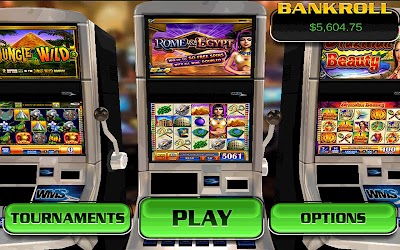
Rome & Egypt Slot Machine Free
The special symbol to watch out for is the Sphinx. Get three or more of this symbol on the reels and receive 15 free spins after triggering the Free Spins bonus round. You can receive a total of 180 free spins in this bonus round, and a winning combination in this round augments your winnings by 3x. The scatter symbol also doubles the stakes if the player lands two or more of it in a regular game.
Cleopatra can substitute herself for any other symbol in the game except the scatters and lets the player make winning combinations like nothing you have ever seen before. Cleopatra also allows the player a shot at doubling the payout if the player can land a winning combination. If a player can collect five wilds on the reels, there is a prize of 10,000 credits and the chance to come away with 100X the wager amount. Now, that’s a queen-sized payout!
Many modern machines we see today have their origins from the machines built during the ancient times. Archaeologists have found evidences and details about ancient machines from the pictures and written descriptions encarved on the walls. Simple or complex, all the machines are made from six simple machines: screw, lever, wheel and axle, pulley, inclined plane, and wedge. The people of ancient era used these ancient machines as technology for various purposes to make their lives easier and safer. The building materials were mainly built out of wood, stone, metal, clay, plant fibres and some were even made of animals bones and tusks of sea creatures.
Several ancient manuscripts were found during the Renaissance period that have mentions about ancient machines. The people of Europe studied about the machines from Greece, China, Egypt, Rome, and Middle East. And they began reinventing, reconstructing and reusing new machines by taking cues from the ancient machines. In the course of time, the ancient machines gradually evolved and oils were developed to have moving parts in machines increasing its efficiency.
Here are 10 ancient machines some of which are used even today and have been an inspiration behind the invention of the modern machines.
1) The Roman Mill
Mainly used for grinding grains into flour, the ancient Roman mills were also used for crushing stones, ores, and wood. A basic rotary mill named ‘mola asarina’ dates back to 200-300 BC was driven by blindfolded horses, donkeys or mules and even human slaves. This rotary mill was primarily used for grinding corn.
2) Vimanas- The Ancient Flying Machine or The Ancient Aircraft
Vimanas were the ancient flying machines whose references have been found in temple carvings and renowned ancient Indian epics. According to Hindu mythology, they were also used in warfares. Apart from flying within Earth’s atmosphere, they could also fly into space and underwater. The ceiling beams of 3000-year old New Kingdom Temple situated at Abydos has certain carvings which have resemblance to modern aircrafts.
3) Ancient Catapults
Ancient catapults were used for increasing the penetrating power and range of missiles by strengthening the bow that launched the missiles. In 399 BC, the mechanical arrow-firing catapult (katapeltikon) was invented by Greek task force according to a historian Diodorus Siculus.
In 350 BC, the evidence of arrow firing machines (katapaltai) was found in a treatise written on siegecraft by Aeneas Tacticus. Dating back to 338-326 BC, an existent inscription from Athenian arsenal enlists numerous stored catapults with shooting bolts of different sizes and springs of sinews. Later to this, an evidence was discovered that clearly highlights switch to torsion catapults being much powerful than flexible crossbows. They dominated the designs of Greek and Roman artillery design after that. One other Athenian inventory from 330 to 329 BC mentions about catapult bolts having heads and flights. Onomarchus of Phocis was the first one to use catapults on the battlefield against Philip II of Macedon. And, Philip's son Alexander the Great was the second commander who use catapults on the battlefield and during the sieges.
The Romans used catapults for battles against Syracuse, Macedon, Sparta and Aetolia during 3rd and 2nd century BC. They even used ballista catapults on their warships.
In Jaina documents, Ajatshatru is said to have used a catapult against the Licchavis in a campaign.
4) Ancient Waterwheels

A waterwheel is a machine that was used to convert the energy generated by free-flowing water into useful power forms. In 1st century BC, the first water wheel was built by Ancient Greeks. Made out of wood, the wheel had 6-8 scoops linked to central shaft. The ancient people used it mainly for grinding grains. According to archaeologists, the power generated by 16 water wheels could be used for grinding around 9900 pounds of flour each day which can feed nearly 12500 people.
5) Ancient Crossbow
Crossbow is a kind of weapon that similar to an ordinary bow along with a horizontal bow-like assembly mounted on a stock. It is believed to have its origins in ancient Europe and China dating back to 6th or 5th century BC. During the Warring States period(second half of 4th century), the recent archaeological evidence mentions the common use of crossbows in China for military purposes.
6) Chinese South-Pointing Carriage or Chinese South-Pointing Chariot
The Chinese south-pointing carriage was an ancient two-wheeled vehicle used to determine the cardinal south direction. The statue mounted on top of the carriage always pointed south and served as a compass. Created by Zhang Heng, the carriage was much like an ordinary wagon. Designed to be driven by animals, it had wooden wheels. The third century AD source the Weilüe, by Yuan Huan mentions about the south-pointing chariot of Ma Jun.
7) Hero’s Coin Operated Holy Water Vending machine
The credit for inventing world’s first vending machine goes to the Greek engineer and mathematician ‘Hero of Alexandria’ of 1st century AD. When a coin was deposited into the slot located at the top of the machine, it dispensed the allocated amount of water. The machines were placed in temples for fair allocation of water without the requiring the help of a priest.
The vending machine functioned on the open valve system. The coin placed in slot of machine went down through lever over the pan and the lever opened a valve thus dispensing the holy water. The machine is also mentioned in the Hero’s book ‘Mechanics and Optics’ under the list of inventions included.
Furthermore, this coin-operated holy water vending machines by Hero resulted in the invention of many other vending machines lending to a monetary gain.
8) Perachora wheel- The Greek Mill
Made by Ancient Greeks in third century BC, Perachora wheel is the first water-driven wheel. During 280−220 BC, the technical treatises Pneumatica and Parasceuastica by Philo of Byzantium record the earliest reference about the mill. These mills have a very simply designed and are said to function well only with high water velocities and millstones with small diameter.
9) Antikythera machine
One scholar proposed that this machine was a calculation device used to predict the motion of sun and moon. However, archaeologists couldn’t find it credible that Greeks could invent such complex instrument during Greece’s decline leading to a controversy.
10) Lever
One of the six simple machines, lever is a bar or a beam used for lifting objects or to pry them loose. Oars, sticks, spear throwers and paddles are different kinds of levers used in the ancient times. The ancient people and hunter gatherers used sticks to pry big rocks or fruits off the ground. Spear throwers were made of wood, antlers and natural material and were called atlatls in North America. The oldest known spear throwers come from French caves date back to 15000-11000 BC.